
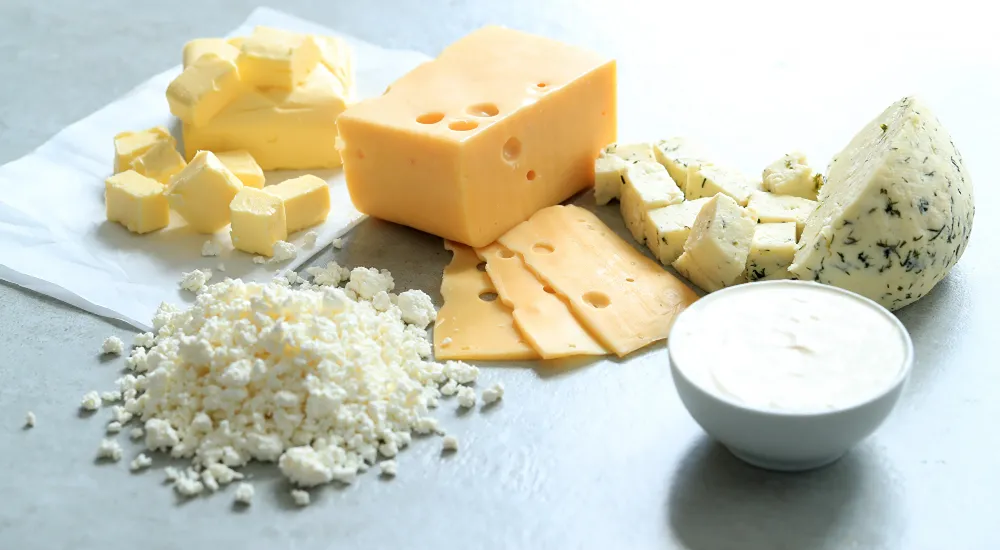
The dairy industry continues to evolve with increasing demand for consistent quality, extended shelf life, and efficient large-scale production. Products such as shredded cheese, grated cheese, and processed dairy formulations face ongoing challenges related to moisture management, texture stability, and handling performance. To address these formulation and processing concerns, manufacturers increasingly rely on functional ingredients that enhance product performance without affecting taste or nutritional value.
One such ingredient is cellulose. Widely used across food applications, cellulose plays an important functional role in dairy and cheese processing by improving texture, maintaining product stability, and supporting efficient manufacturing operations.
Understanding Cellulose in Food Applications
Cellulose is a plant-derived dietary fiber obtained from purified natural sources. In food processing, it is valued not for flavor or nutrition contribution but for its functional properties. Forms such as powdered cellulose and microcrystalline cellulose are commonly used as functional ingredients because they are inert, tasteless, and stable under varying processing conditions.
These properties make cellulose especially suitable for dairy applications where maintaining product integrity without altering sensory characteristics is essential.
Why Dairy and Cheese Processing Present Unique Challenges
Cheese products naturally contain moisture and fat, both of which can create formulation and processing difficulties. During storage and transportation, moisture migration can cause cheese particles to stick together, while fat separation may lead to greasy surfaces and inconsistent texture.
Common industry challenges include:
- Clumping in shredded and grated cheese
- Uneven texture over shelf life
- Reduced flow during packaging
- Oil separation in low-fat formulations
- Handling difficulties in automated production
Addressing these issues requires functional ingredients that stabilize the product physically rather than chemically.
Moisture Management in Cheese Processing
Moisture control is one of the most critical aspects of dairy product stability. Excess surface moisture can lead to clumping and may contribute to reduced shelf stability.
Cellulose helps manage moisture by binding free water and distributing it within the product matrix. This prevents localized moisture buildup and supports consistent texture throughout storage.
In shredded cheese applications, cellulose acts as an effective anti-caking agent, allowing individual strands to remain separated and free-flowing.
Improving Texture and Structural Stability
Texture plays a major role in consumer perception of cheese quality. Changes in storage conditions can cause products to lose firmness or develop uneven consistency.
Cellulose helps support the structural integrity of cheese formulations, helping maintain textural stability over time. Because it is inert, it performs this function without affecting flavor, aroma, or melt behavior.
This makes cellulose particularly useful in:
- Processed cheese blends
- Shredded cheese products
- Reduced-fat cheese formulations
Fat Management and Oil Control
Fat migration is another common concern in dairy processing. Over time, fats may separate and accumulate on product surfaces, affecting appearance and handling.
Cellulose helps maintain a more uniform distribution of fat by supporting the physical structure of the cheese matrix. This reduces oil separation and helps maintain consistent product appearance.
In low-fat cheese products, cellulose can help improve body and mouthfeel in reduced-fat cheese formulations.
Enhancing Flowability and Processing Efficiency
Modern dairy manufacturing relies heavily on automated equipment. Poor-flowing products can slow production lines, cause inconsistent filling, and increase operational downtime.
Cellulose improves flowability by reducing particle adhesion and preventing clumping. This allows cheese products to move smoothly through cutting, mixing, and packaging systems.
Benefits for manufacturers include:
- Improved packaging efficiency
- Reduced processing interruptions
- Better product uniformity
Supporting Clean-Label and Consumer Expectations
Consumers increasingly prefer ingredients derived from recognizable and plant-based sources. Cellulose aligns well with these expectations due to its natural origin and functional versatility.
As a plant-derived fiber, cellulose helps manufacturers improve processing performance while maintaining label transparency. Its neutral sensory profile allows manufacturers to enhance functionality without introducing artificial additives.
Applications of Cellulose in Dairy Products
Cellulose is widely used across different cheese formats, including:
- Shredded cheese – prevents clumping and improves flow
- Grated cheese – maintains particle separation
- Processed cheese blends – improves structural consistency
- Low-fat cheese – enhances texture and mouthfeel
- Ready-to-cook cheese products – supports stability during heating
These applications demonstrate how cellulose functions as a practical processing aid rather than a flavor-modifying ingredient.
Choosing the Right Cellulose Ingredient
The effectiveness of cellulose depends on factors such as particle size, purity, and manufacturing consistency. Food manufacturers should consider sourcing from experienced producers that maintain strict quality standards and controlled manufacturing processes.
Reliable cellulose suppliers help ensure consistent performance across batches, supporting predictable formulation outcomes and production efficiency.
Conclusion
The functional role of cellulose in dairy and cheese processing extends far beyond basic ingredient inclusion. From moisture regulation and texture stability to improved flowability and manufacturing efficiency, cellulose helps solve many of the practical challenges faced by cheese manufacturers.
As dairy production continues to scale globally, cellulose-based ingredients provide a reliable way to enhance product quality while maintaining consistency and operational efficiency. With expertise in cellulose excipients and a focus on quality-driven manufacturing, Ankit Pulps & Boards Pvt. Ltd. supports dairy processors with solutions designed for modern food production needs.
Frequently Asked Questions (FAQs)
Why is cellulose used in cheese processing?
Cellulose helps prevent clumping, manage moisture, and maintain texture stability without affecting flavor or aroma.
Does cellulose affect the taste of cheese?
No. Food-grade cellulose is tasteless and odorless, making it suitable for dairy applications without altering sensory properties.
Is cellulose safe for dairy applications?
Yes, cellulose is widely approved for food use and commonly used in cheese and processed dairy products.
How does cellulose prevent clumping in shredded cheese?
It helps control surface moisture and creates a physical barrier between particles, keeping cheese free-flowing.
Can cellulose be used in low-fat cheese formulations?
Yes, cellulose helps improve texture and structural stability in reduced-fat dairy products.