
Blogs
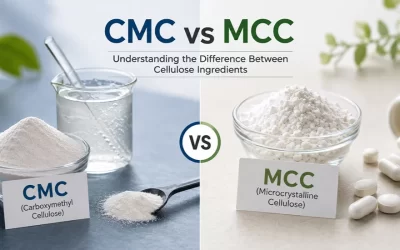
CMC vs MCC: What’s the Difference Between Carboxymethyl Cellulose and Microcrystalline Cellulose?
Cellulose-based ingredients play a vital role in modern food and pharmaceutical formulations. Among the most widely used are Carboxymethyl Cellulose (CMC) and Microcrystalline Cellulose (MCC). Although both are derived from cellulose, they have different chemical...

Why Microcrystalline Cellulose Is Used in Low-Fat Food Products
Consumer demand for healthier food options has grown significantly over the last decade. More people are looking for products with reduced fat content while still expecting the same taste, texture, and overall eating experience. For food manufacturers, meeting these...

Why Direct Compression Tablets Fail: 4 Common Excipient Mistakes
The direct compression of tablets is one of the most preferred manufacturing methods in the pharmaceutical industry. It is fast, cost-effective, and eliminates several processing steps involved in wet granulation. Because of its efficiency, many manufacturers rely on...

Top 5 Reasons for Tablet Weight Variation and How to Fix Them
In pharmaceutical manufacturing, consistency is everything. Every tablet produced must meet strict quality standards to ensure accurate dosage, product reliability, and regulatory compliance. One of the most common challenges faced during tablet production is Tablet...

Understanding Key Challenges in Tablet Manufacturing
Tablet manufacturing is one of the most widely used production methods in the pharmaceutical industry. Tablets are convenient, stable, easy to transport, and cost-effective to produce at scale. However, behind every successful tablet formulation lies a highly...

What Are Excipients and Why They Matter in Pharmaceutical Formulations
When we think about medicines, the focus usually stays on the active ingredient, the one responsible for the therapeutic effect. But behind every effective formulation, there is a carefully selected set of supporting ingredients known as excipients. These components...