
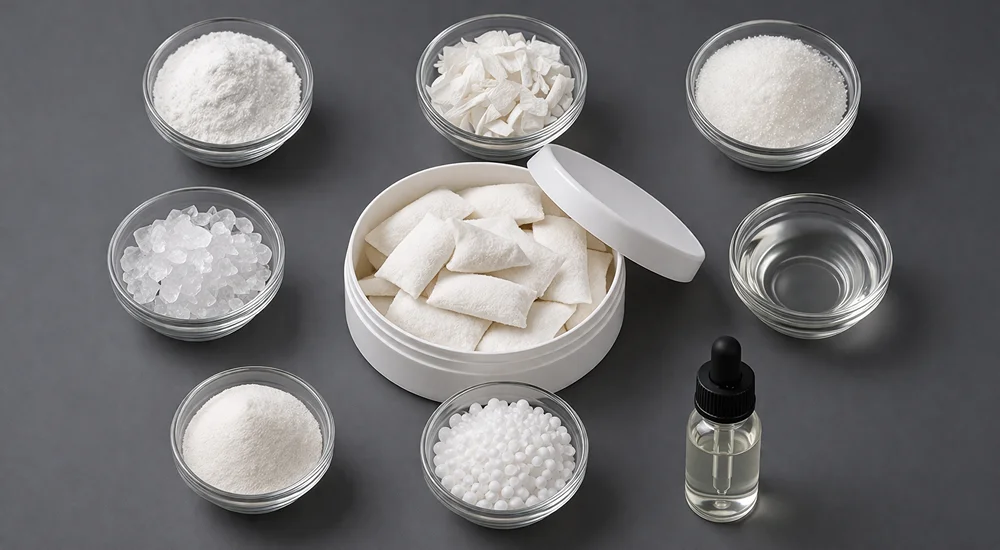
The global rise of nicotine pouches has created growing curiosity around what actually goes into these products. Unlike traditional smokeless tobacco products, modern pouches are designed to deliver nicotine without containing tobacco leaf material. Because of this shift, the formulation of these products depends heavily on carefully selected ingredients that support structure, stability, and consistent performance.
At the center of these formulations are tobacco free nicotine pouch ingredients, which include nicotine, flavor components, moisture regulators, and structural excipients. While nicotine provides the active component, the remaining ingredients help maintain the pouch’s physical structure and ensure consistent performance during manufacturing, storage, and use.
As nicotine pouches continue to evolve, manufacturers focus on balancing these ingredients to create stable formulations that meet both consumer expectations and production requirements.
What Makes Nicotine Pouches Tobacco Free
One of the defining characteristics of nicotine pouches is that they contain no tobacco leaf material. Instead, the nicotine used in these products is either purified from tobacco during processing or produced synthetically. This allows manufacturers to deliver nicotine while avoiding traditional smokeless tobacco components.
The absence of tobacco leaf means that nicotine pouch formulations rely more heavily on functional ingredients to maintain their structure. In traditional tobacco products, plant material naturally provides bulk and texture. In nicotine pouches, this structural role is instead provided by selected excipients and fillers.
Because of this, the ingredients must be carefully chosen to replicate the structural properties needed for stability and consistency.
Core Ingredient Categories in Tobacco Free Nicotine Pouches
Modern nicotine pouch formulations typically contain several categories of ingredients, each serving a specific functional purpose. Together, these components ensure the product remains stable and easy to manufacture.
Nicotine Source
Nicotine is the primary active component in the formulation. It may be derived from purified tobacco extracts or synthetic processes that produce nicotine without plant material.
Structural Fillers
Structural fillers provide the bulk of the formulation and help maintain pouch integrity. Microcrystalline cellulose is widely used among nicotine pouch excipients due to its consistent performance and processing advantages.
Flavor Compounds
Flavor ingredients are added to provide different product profiles, such as mint, citrus, or fruit-based variations.
Moisture Regulators
Ingredients such as glycerol and propylene glycol help maintain moisture levels within the formulation.
pH Modifiers
These ingredients help maintain the chemical balance within the pouch environment.
Each of these components contributes to the overall formulation and helps manufacturers produce nicotine pouches with consistent quality.
Nicotine Source in Modern Nicotine Pouch Formulations
The nicotine component used in nicotine pouches must meet strict purity requirements to ensure product consistency and stability. Depending on the manufacturing approach, nicotine may be sourced from refined tobacco extracts or produced through synthetic processes.
Regardless of the source, the nicotine must be incorporated into the formulation in a way that maintains even distribution across the pouch contents. This requires careful blending with other ingredients in the formulation, particularly the structural components that form the base of the pouch matrix.
The combination of nicotine with functional excipients ensures that the product maintains consistent composition throughout production batches.
Structural Ingredients That Give Nicotine Pouches Their Form
One of the most important elements of nicotine pouch design is the structural filler used within the formulation. Since the product contains no tobacco leaf, the formulation relies on alternative ingredients to create the internal structure of the pouch.
Among these ingredients, microcrystalline cellulose in nicotine pouches is widely used because of its stability and inert nature. As a cellulose-based excipient, it provides the bulk material needed to support the formulation while maintaining uniform distribution of ingredients.
Many manufacturers rely on pharma grade MCC for nicotine pouches because it offers controlled particle characteristics and predictable performance during formulation and production. This ensures stability and consistency across manufacturing batches.
The presence of structural excipients such as microcrystalline cellulose helps create a balanced powder matrix that holds nicotine, flavor compounds, and other ingredients in place.
Flavor Systems Used in Nicotine Pouches
Flavor plays a significant role in the overall nicotine pouch experience. Manufacturers often develop a wide range of flavor profiles to meet consumer preferences, including mint, menthol, citrus, berry, and other combinations.
Flavor compounds must be carefully integrated into the formulation to ensure that they remain stable over time. These compounds are typically combined with carriers that allow the flavors to disperse evenly within the pouch contents.
This uniform distribution helps maintain consistent flavor perception across different pouches produced within the same batch.
Moisture Control Ingredients in Nicotine Pouches
Maintaining proper moisture levels is another key factor in nicotine pouch formulations. Ingredients such as glycerol or propylene glycol help retain moisture within the pouch contents, preventing excessive dryness.
Moisture regulators help preserve the texture of the pouch contents while supporting formulation stability during storage and distribution. Without these ingredients, the pouch material could become brittle or inconsistent over time.
Proper moisture balance also helps maintain the structural integrity of the powdered formulation contained inside the pouch.
pH Modifiers in Nicotine Pouch Ingredients
pH modifiers are included in nicotine pouch formulations to help maintain the chemical balance of the pouch environment. These ingredients adjust the acidity or alkalinity within the formulation, helping stabilize the formulation environment.
Common pH modifiers used in nicotine pouch ingredients include compounds such as sodium carbonate or sodium bicarbonate. When combined with other ingredients, these components help maintain a stable formulation environment.
How Tobacco Free Nicotine Pouch Ingredients Influence Product Experience
The experience of using a nicotine pouch is shaped by the combination of ingredients used in the formulation. Structural fillers influence the texture and stability of the pouch contents, while flavor systems determine the sensory profile experienced by the user.
Ingredients such as microcrystalline cellulose in nicotine pouches contribute to the internal structure of the pouch, helping maintain uniform distribution of the formulation components. This structural stability ensures that the pouch maintains its shape and consistency during handling and storage.
Similarly, moisture regulators influence the texture of the pouch contents, helping maintain balanced conditions within the pouch. Flavor carriers and pH modifiers further contribute to the overall formulation by supporting ingredient stability and uniform distribution.
When properly selected and balanced, these components enable consistent performance throughout production and use.
Conclusion
The development of modern nicotine pouches relies on a carefully balanced combination of nicotine pouch ingredients that support structure, stability, and consistent product performance. While nicotine provides the primary active component, the excipients and structural ingredients used in the formulation play an equally important role in ensuring the pouch maintains its physical integrity and consistency.
Among these ingredients, microcrystalline cellulose in nicotine pouches serves as a widely used structural excipient due to its stability and predictable performance. Many manufacturers prefer pharma grade MCC for nicotine pouches because of its controlled quality and suitability for advanced formulation requirements.
With decades of experience in cellulose processing and excipient manufacturing, Ankit Pulps & Boards Pvt. Ltd. provides high-quality microcrystalline cellulose solutions designed to support modern formulation needs. Through consistent manufacturing standards and deep technical expertise, the company helps manufacturers develop reliable cellulose excipients suitable for emerging applications such as nicotine pouch formulations.
Frequently Asked Questions
What are tobacco free nicotine pouch ingredients?
Tobacco free ingredients in nicotine pouches include nicotine, structural fillers, flavor compounds, moisture regulators, and pH modifiers used to create a stable formulation.
Do nicotine pouches contain tobacco?
No, nicotine pouches do not contain tobacco leaf. They use purified or synthetic nicotine combined with other formulation ingredients.
Why is microcrystalline cellulose used in nicotine pouches?
Microcrystalline cellulose provides structural support and helps maintain uniform distribution of ingredients within the pouch formulation.
What is pharma grade MCC for nicotine pouches?
Pharma grade MCC refers to high-purity microcrystalline cellulose manufactured under controlled conditions to ensure consistent quality and performance.
How do ingredients influence nicotine pouch performance?
The ingredients used in nicotine pouch formulations determine the pouch structure, flavor distribution, stability, and overall product consistency.